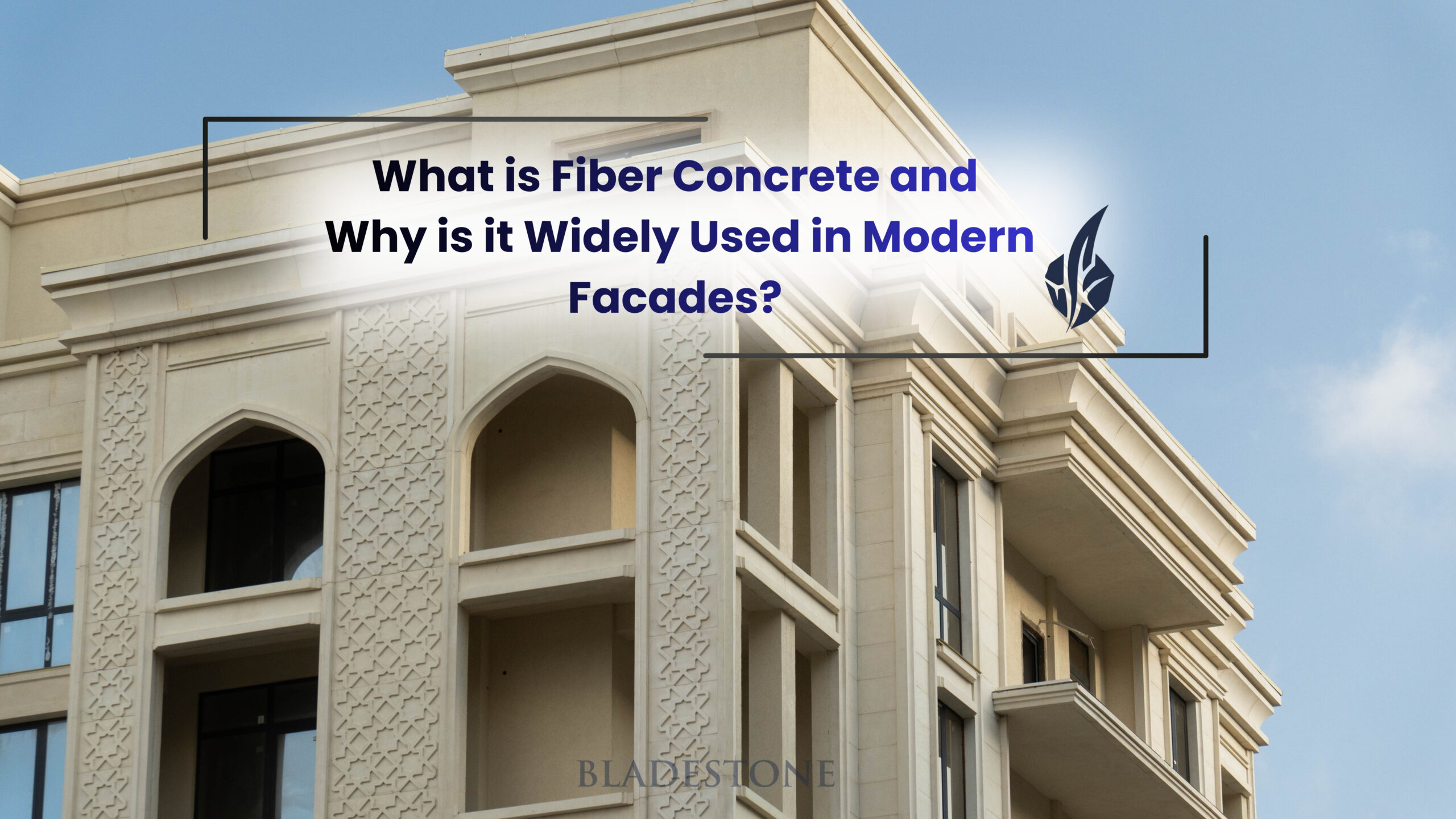
Fiber concrete has emerged in recent years as one of the increasingly prevalent materials in facade systems. Its primary advantage lies in offering a lighter structural solution compared to traditional concrete while providing greater architectural flexibility. The material is considered a balanced choice for facade applications, both technically and aesthetically.
Why is Fiber Concrete More Effective in Facades?
The glass fibers embedded within the material ensure that the surface is more resistant to cracking and deformation. Changes in temperature, humidity, and exposure to sunlight result in more stable performance for fiber concrete facades. This characteristic makes the material particularly advantageous for long-term service life.
Moreover, fiber concrete allows large surfaces to be covered with fewer structural elements, creating a cleaner and more balanced visual composition from a design perspective.
Strategic Advantages
Choosing fiber concrete as a facade material does not only provide aesthetic benefits; it also offers a technically and economically balanced solution. The controlled production and installation process enables more precise project scheduling.
Additionally, fiber concrete facade systems offer architects and designers greater creative freedom. Complex geometries, diverse textures, and fine details can be realized without introducing additional structural risks. This contributes to the distinctiveness of the project and enhances its overall value.